
Last Updated: November 23, 2026
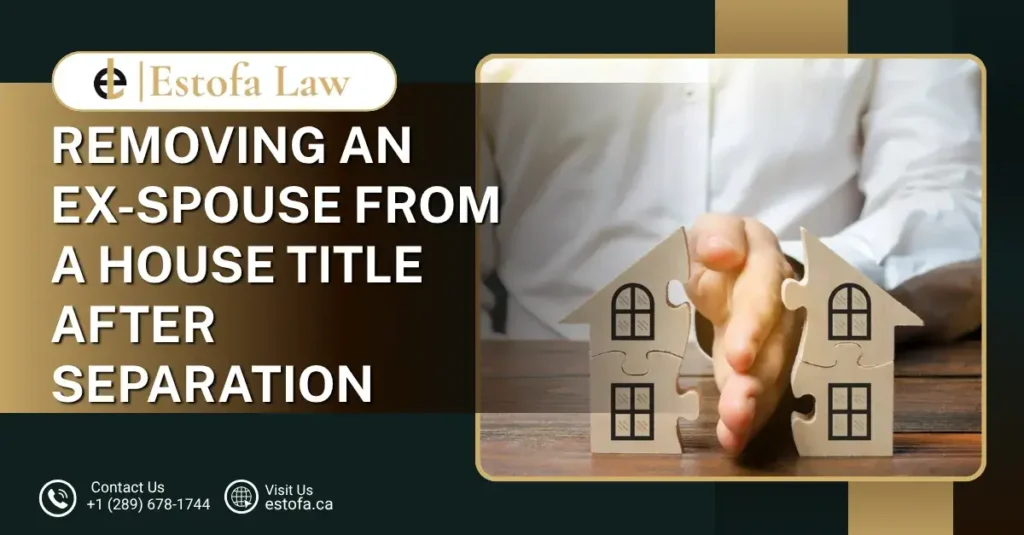
Separation changes almost everything about a shared home except the paperwork. Until someone registers a change, both names stay on the title, and both people keep the legal ownership rights that come with it. Many separated couples only find this out when they try to sell or refinance, which is why speaking with a property title transfer lawyer early in the process can save months of back and forth.
This guide explains removing an ex-spouse from a house title in Ontario, step by step. It covers what the law requires, how the mortgage fits in, whether you can do it without refinancing, and which taxes may apply when one spouse keeps the home.
In short, to remove an ex-spouse from a home title in Ontario, the departing spouse signs a Transfer of Land in favour of the spouse keeping the home, usually under a written separation agreement or a court order. A lawyer then registers the Transfer electronically in Ontario’s land registry system. If there is a mortgage, the lender must approve the change, which normally means refinancing or a mortgage assumption with a release of covenant.
Can You Remove an Ex-Spouse From a House Title?
Yes, but only with their signature or a court order. When two people own a home together, each has a registered interest in the property. One owner cannot simply delete the other from title, even after separating, and even if the other person has moved out and stopped paying toward the home. Property ownership after divorce or separation does not change automatically.
There are two legal routes to remove an ex-spouse from title:
Either way, the change only takes effect once it is registered on title. A private agreement between the two of you, even a signed one, does not update the land registry on its own.
Removing a Name from Property Title After Separation in Ontario
Ontario adds a layer that many online guides skip. Under the Family Law Act, the home a married couple was living in at the time of separation is usually the matrimonial home, and both spouses have an equal right to live there no matter whose name is on title. Neither spouse can sell, transfer, or mortgage that home without the other’s written consent or a court order. If you are not sure whether your property qualifies, our explanation of the difference between a matrimonial home and a family home walks through how the law treats each one.
These protections are why removing a name from Ontario property title after separation is handled through formal documents rather than an informal handover. The Transfer itself contains spousal statements, and your lawyer confirms the right consents are in place before anything is registered.
Married Spouses vs Common-Law Partners
The matrimonial home rules apply to married spouses. Common-law partners in Ontario do not get the same automatic possession rights or equalization of property under the Family Law Act, so their rights after a breakup mostly follow what is registered on title, along with any claims based on financial contributions. If you were never married, a written agreement becomes even more important before anyone signs a Transfer.
Joint Tenancy vs Tenancy in Common
Check how you hold title before you start. With a joint tenancy, both owners hold the whole property together, and if one dies, the survivor automatically takes it all. With a tenancy in common, each owner holds a separate share that passes through their estate. After separation, some owners consider joint tenancy severance so an ex-spouse does not inherit the entire home by survivorship while the transfer is still being worked out. Severing a joint tenancy on a matrimonial home can raise consent issues, so get legal advice before taking that step.
Does Removing a Name From Title Remove It From the Mortgage?
No. The title shows who owns the home. The mortgage is a loan agreement with the lender, and everyone who signed it stays personally responsible for the debt until the lender releases them. Taking a name off title while leaving it on the mortgage means one person carries the debt without owning any part of the home.
Most mortgage terms also require lender consent before ownership changes, so the lender needs to be involved from the start. If you are the spouse leaving the home, our guide on how to remove your name from a mortgage after divorce in Ontario explains the lender side of this process in more detail. In practice, the mortgage is usually handled in one of three ways:
Separated and Need to Update Your Home Title? Get It Done Right the First Time
Estofa Law’s real estate team reviews your separation agreement, coordinates with your lender, and registers the transfer so your title reflects the deal you agreed to.

How to Remove an Ex-Spouse From a Home Title in Ontario
Here is how the process to transfer house title after separation usually unfolds in Ontario.
Step 1: Put the Agreement in Writing
Start with a written separation agreement or a court order that states who keeps the home, how the equity is divided, and who is responsible for the mortgage. This marital property settlement is what your lawyer and lender will rely on, and each spouse should get independent legal advice before signing it. In the US, property terms often appear in a divorce decree, but in Canada a divorce order usually only ends the marriage and does not divide property, so there is no need to wait for the divorce once the house is agreed.
Step 2: Order a Title Search
A title search pulls the parcel register for the property. It confirms exactly who is on title, how they hold it, and whether there are mortgages, lines of credit, liens, or other registrations that need to be dealt with before or during the transfer. Surprises like a forgotten home equity line of credit are far easier to handle at this stage.
Step 3: Agree on Value and the Equity Buyout
If one spouse keeps the home, the other is usually paid for their share. Most couples get an appraisal, deduct the mortgage balance, and split the remaining equity according to their agreement. The equity buyout can be paid in cash, funded through refinancing, or offset against other assets as part of the overall home equity division.
Step 4: Get Lender Approval or Refinance
Contact your lender early. Ask whether they allow a mortgage assumption with a release of covenant for the departing spouse, or whether you will need to refinance. Lenders will review the remaining spouse’s income, credit, and debts, and their approval timeline often decides the closing date.
Step 5: Sign and Register the Transfer
Your lawyer prepares the Transfer, the land transfer tax statements, and the spousal statements, and arranges for both spouses to sign. The Transfer is then registered electronically through Teraview, Ontario’s land registration system. Once it is accepted, the land registry update is immediate and your ex-spouse is no longer on title.
Step 6: Update Everything Linked to the Home
After registration, update your home insurance, your property tax account with the municipality, and your utility accounts. It is also a good time to review your will and any powers of attorney, since your ex-spouse may still be named in them.
Does Your Ex Still Have Rights to the House After Their Name Is Removed?
Once the Transfer is registered, your ex-spouse no longer owns the home or has any say in selling, refinancing, or renting it. Any rights they keep come from your separation agreement rather than the title, such as a buyout amount that is still being paid in instalments. This is why the agreement and the registration should match exactly.

How to Remove Someone From House Title Without Refinancing
It is possible, but only in certain situations. Refinancing is not a legal requirement for the title transfer itself. The issue is the mortgage, and the lender decides how that is handled. You may be able to avoid refinancing when:
One shortcut to avoid is taking your ex off title while leaving them on the mortgage without a release. They stay liable for a home they no longer own, and you may be in breach of your mortgage terms. Get any lender approval in writing before the Transfer is registered.
Quitclaim Deed vs Ontario Transfer of Land
If you have been researching how to remove a name from title after divorce, you have probably seen terms like quitclaim deed and interspousal transfer deed. These are US documents that a real estate attorney files with a county recorder’s office in American states. Ontario does not use them.
In Ontario, ownership changes through an electronic Transfer of Land registered in the provincial land registry system, and that registration is generally completed by a lawyer. You may also see the phrase deed of release online. Here, a release usually refers to a lender releasing a borrower from a mortgage or a discharge of a registered mortgage, not to giving up ownership. Using the correct Ontario document avoids a rejected registration or gaps on title.
Do You Need a Lawyer to Remove a Name From Title After Divorce in Ontario?
In practice, yes. Ontario titles are changed through electronic registration, which is generally completed by lawyers, and the Transfer must include the correct spousal statements and land transfer tax statements. A lawyer also checks that the mortgage, the agreement, and the registration line up before your ex-spouse signs.
What Taxes Apply When You Transfer House Title After Separation?
Do You Pay Land Transfer Tax When You Take Over the House From Your Ex?
Often not. Ontario land transfer tax is normally charged on the value paid for a property, including any mortgage the new owner takes on. A property title transfer between spouses or former spouses can be exempt, but only when it fits specific situations, such as a transfer made under a court order or under a written separation agreement in which the parties agreed to live separate and apart. Your lawyer claims the exemption in the tax statements at registration, and Toronto applies a similar exemption to its municipal land transfer tax.
Capital Gains Tax Implications
A transfer between spouses or former spouses as part of settling property rights on a marriage breakdown generally rolls over at the original cost for income tax purposes, so no capital gain is triggered at the time of transfer. If the home was your principal residence for the years you owned it, the principal residence exemption usually shelters the gain as well. Rental properties, cottages, and second homes work differently, so get tax advice before transferring anything other than your main home.
Property Tax Reassessment
In some US states, a change in ownership triggers a property tax reassessment. In Ontario, property assessments are set by MPAC based on market value, so a transfer between spouses does not reset your property taxes. You only need to update the name on the municipal tax account.
What If Your Ex-Spouse Will Not Sign the Transfer?
Disagreements over the house are one of the most common reasons a separation stalls. Before deciding on next steps, it helps to know what you can and cannot do on your own.
Can You Remove Your Ex-Spouse From the House Title Without Their Consent?
No. You need their signature on a Transfer or a court order. Ontario law does not allow one owner to remove another owner from title on their own, even if the other person has moved out and stopped paying toward the home.
What Are Your Options If They Refuse?
If talks stall, mediation is often the fastest way to reach a deal. If that fails, a family law lawyer can ask the court to decide the property issues, which can include an order that the home be sold or transferred.
Timing matters too. In Ontario, married spouses generally must start a claim for equalization of net family property within six years of separation or two years of a divorce, whichever comes first. Letting a title dispute sit for years can limit your options.
How Long Does It Take to Remove a Name From House Title in Ontario?
The registration itself is quick. Once the documents are signed and any funds are ready, a Transfer can usually be registered the same day. The full process takes longer because of the steps around it. With an agreement in place and no mortgage, it can be done within a couple of weeks. When refinancing or a lender assumption is involved, plan for several weeks, since lender approval is usually the slowest part.
Costs depend on the file. Expect legal fees for the transfer, lender fees for an assumption, possible prepayment penalties if a fixed mortgage is broken early, an appraisal fee, and registration costs. For homeowners in Halton, working with real estate lawyers in Burlington who handle spousal transfers regularly helps keep the lender, the documents, and the registration on one timeline.
Documents You Will Need
Gathering these early makes removing an ex-spouse from a house title much smoother:
Getting the Title Right After Separation
Removing an ex-spouse from a house title comes down to lining up three things in the right order, the agreement, the mortgage, and the registration. When those are handled properly, the transfer itself is quick, and both of you can move forward without loose ends tied to the home.
If you are separating and one of you is keeping the home, Estofa Law can review your agreement, coordinate with your lender, and register the transfer correctly. Reach out to our real estate team before anyone signs, so your title, your mortgage, and your separation agreement all say the same thing.
The information contained herein is intended for general informational purposes only and does not constitute legal advice. Since every situation and transaction carries its own distinct characteristics, it is strongly advisable to seek professional legal counsel tailored to your specific needs. Should any legal concerns arise, consulting a qualified lawyer is highly recommended.

Hassan Tahir
Barrister & Solicitor
Hassan Tahir shows strong legal skill and care for clients, with strong experience in real estate and immigration law along with a broad understanding of various legal matters. He provides clients with tailored answers, focusing on their needs first. Hassan values honesty, clarity, and great service, whether he’s handling residential or business property deal, or visa application cases.
Latest Blogs
-

Can Foreigners Buy New Homes in Canada After Budget 2026
• November 16, 2026 -
Matrimonial Home vs Family Home – What’s the Difference?
• November 10, 2026 -
How to Remove a Deceased Spouse’s Name From Your Home Title
• November 2, 2026 -
Ultimate Document Checklist for Express Entry PR Applicants
• October 29, 2026 -
Notary Public vs Commissioner of Oaths – What’s the Difference?
• October 26, 2026